
Blog
The origins and lineage of Auricular Medicine - Part 2
The Lineage of Auricular Medicine
In the last issue of the Red Clover Clinic Newsletter, we discussed the origins of Auricular Medicine. In Part 2, we will discuss many of the practitioners and their innovations that followed Dr. Paul Nogier’s initial discoveries and methods.
German Auricular Medicine
As mentioned in Part 1, Dr. Frank Bahr worked closely with Dr. Nogier to develop Auricular Therapy/Medicine. After some years, Dr. Bahr broke away from Dr. Nogier and worked on developing his own auricular assessment and treatment methods. He discovered a way to identify and treat blockages in the body, which, in theory, defeat the purpose of Nogier’s Three Phase system. Among his discoveries and accomplishments, Dr. Bahr discovered many functional points (points that calm the nervous system, lessen inflammation, alleviate pain, regulate hormone levels, regulate emotions, etc.). He also increased the use of frequencies in both assessment and treatment primarily delivered by low-level lasers and he developed a method to treat soul traumas, i.e. PTSD.
There are many other people who made important contributions to the field of German Auricular Medicine, most notably Dr. Beatte Strittmatter. She added the ability to identify dental blockages, which are hidden dental infections that go unnoticed for years, causing all kinds of health problems. If found early enough, they can often be treated with laser treatment, but sometimes require root canals and extractions. She also wrote an in-depth pocket atlas of auricular acupuncture that has been translated into five languages.
Canadian developments of German Auricular Medicine
Muriel Agnes, PhD, is responsible for bringing German Auricular Medicine to North America. She studied with Dr. Beatte Strittmatter and Dr. Peter Gross. She developed a curriculum and founded the Vital Principle Institute, which is now known as the Canadian Institute of Auricular Medicine (CIAM). Her son, Dave Maybee, has continued teaching and expanding Auricular Medicine practice. He has developed his own approach to healing trauma, called Auricular Trauma Release.
Nader Soliman’s contributions to Auricular Medicine
Dr. Nader Soliman is an anesthesiologist who became an expert in the field of Auricular Medicine, following Nogier’s methods. He developed SAAT, a powerful allergy treatment, as well as formulating an extensive line of bioenergetic remedies to treat complicated conditions.
Soliman’s Auricular Allergy Technique (SAAT)
SAAT is a powerful auricular acupuncture technique that was developed by Dr. Soliman. It often completely clears or significantly reduces allergy and sensitivity symptoms by reprograming the immune system to not react to allergens. Each allergen is addressed with one needle in a precise location that is specific to each individual. Several allergens can be treated in one visit. The needles are retained in the ear for 3 to 4 weeks, and are secured with a natural, medical adhesive and plaster, making them unobtrusive and very easy to tolerate.
Soliman’s Auricular Medicine
Soliman’s Auricular Medicine uses bioenergetic field testing for assessment and his line of bioenergetic remedies as the primary treatment, with the occasional addition of SAAT treatment. The effectiveness of Soliman’s Auricular Medicine method comes from its very broad approach to clearing all possible barriers to healing, detoxifying the organs at the cellular level, and stabilizing the immune system. This restoration of normal function allows the body to heal itself.
Soliman’s Auricular Medicine is particularly effective at addressing hard-to-treat conditions, such as: chronic fatigue syndrome, fibromyalgia, chronic pain, psycho-emotional disorders, chronic Lyme disease, MCAS, allergies, recurring conditions such as rashes, sinus and urinary tract infections, chronic viral infections, autoimmune disorders, hormonal imbalances, exposure to mold, environmental toxins and heavy metals, and any mysterious, chronic condition.
As you can see, the practice of Auricular Medicine is broad and complex. I feel fortunate to have studied with Muriel Agnes, Dave Maybee, Dr. Frank Bahr, Dr. Beatte Strittmatter, and Dr. Nader Soliman. I’ve also done some remote trainings in French Auricular Medicine with Mikhael Adams, N.D. and have learned about the power of adding electrical stimulation to auricular needles from Dr. Jeremy Steiner. I’m grateful to all of these wonderful teachers and how they have expanded and enriched my understanding and practice of Auricular Medicine.
Marie's Body of Knowledge
I’ve been out in the garden and now my body hurts….
Sunshine, warmer temperatures, and the change of seasons: all are invitations to head out to dig in the garden. Many people find peace and tranquility digging in the dirt and revel in its therapeutic effect on their mental health. It’s an opportunity to connect to Mother Earth and a profound opportunity, on a daily basis, to be a source of grounding to the Earth.
However, before enjoying the beautiful flowers and/or harvesting vegetables, there’s weeding, tilling, planting, and watering. All of which, depending on the body mechanics you choose, put a significant amount of stress on your body.
Bending over at the waist puts significant strain on your low back and neck. Sitting and twisting causes stress to your entire spine. Kneeling creates compression to your knees. Pulling irritates your shoulders, neck, and upper back. Pushing thru a shovel with your foot generates force through your foot, knee, hip, and low back.
What is the most effective way to navigate these activities with the least amount of body discomfort? The simplest recommendation is posture, body mechanics, modifying activity, and building up endurance.
Gardening is exercise and like running, you wouldn’t go from not running at all to running a 10k for your first time out on the streets. It’s important to warm up your muscles and build up endurance.
It would be helpful to spend 10-15 minutes stretching your low back, hip flexors, hamstrings, neck, and shoulders before heading outside. Start with 60-90 minutes of gardening and then take a break. Go back to it later or the next day, allowing your body to build up activity tolerance. Change positions every 15-20 minutes to change the stresses on your body. Consider using a rolling stool to scoot around the flower beds and garden. Avoid bending over at the waist and twisting, as those two positions are particularly hard on your body regardless of the activity.
If you’re not sure what to do to stretch or you end up with post-gardening aches and pains that that aren’t resolving, make an appointment with a physical therapist to get you back on track. A physical therapist will provide hands-on manual therapy to decrease muscle tightness and improve joint mechanics, as well as give you exercises to increase mobility, decrease pain, and improve function. Happy gardening!!
The origins and lineage of Auricular Medicine—Part 1
The origins of Auricular Medicine
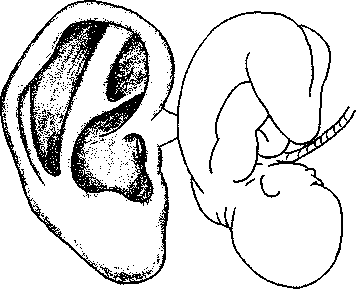
So much of my practice revolves around the ears! You might be wondering why that is. The simple answer is that the ear contains a representative map of the entire body, including the musculoskeletal system, the organs, and the central nervous system. This map is projected onto the ear by the brain, which acts as a relay through which we recognize and experience illnesses and pain syndromes in our body. Those experiences are then projected by the brain onto the ear. By treating the ear, a signal is recognized by the brain, and sent to the part of the body in need of help. Thus, the ears give the practitioner a two-way avenue for direct communication with the brain in a way that impacts healing anywhere in the body.
Now that the fundamentals are out of the way, let’s dive deeper into how Auricular Therapy/Medicine has developed over the decades. This will be a two-part article. Here in Part 1 we will explore the origins of Auricular Medicine, and in Part 2 (July/August), we will learn about its lineage up to today.
The birth of Auricular Therapy
Auricular acupuncture began in China, but its in-depth development occurred in Europe, beginning in the 1950s. As the story goes, the French neurologist Dr. Paul Nogier noticed a scar on the ears of several of his patients. The patients reported that the scars were the result of an effective treatment for sciatica, performed by a lay practitioner of this particular treatment. Dr. Nogier was intrigued, and proceeded to do further research, ultimately discovering that the entire body is mapped on the ear in the configuration of an upside-down fetus.
In 1956, Dr. Nogier’s findings were published in an international acupuncture journal. The Chinese adopted this ground-breaking, foundational information, and built upon it using the traditional Chinese medicine system. As Nogier continued to research Auricular Therapy, he worked with Dr. Frank Bahr of Germany and Dr. Rene Bourdiol of France. Through these connections, European Auricular Therapy continued to develop in France and Germany. The French, German, and Chinese systems share a lot in common, but there are distinctive features within each system.
Nogier’s three-phase Auricular Therapy
Nogier noticed that the Chinese ear maps included different organ locations from his inverted fetus ear map. He found that the Chinese points were also effective in relieving conditions. This information fueled discovery of his three-phase system. Nogier found that the map changed depending on how chronic the condition was. Phase 1, the acute phase, was represented by the original inverted fetus map. Phase 3, the sub-acute phase, and Phase 2, the chronic/degenerated phase, each have their own distinct map. (Yes, the numbers are out of order … they are in the order that Nogier discovered and mapped each phase.) For example, if someone has chronic low back pain, but the tissues are still mostly intact, they may have active points in both Phase 1 and Phase 3.
Auricular Therapy evolves into Auricular Medicine
Vascular Autonomic Signal
In 1965, Dr. Nogier first identified the Vascular Autonomic Signal (VAS). The VAS appears as an exaggerated pulsing, most often monitored at the wrist, when the body experiences a change in stimulation—a stress response to a particular stimulus. In other words, a point that elicits a strong VAS is a point that is experiencing a lot of stress, pain, or dysfunction. By exposing the body to different tools, such as color filters, vials containing various substances, specific frequencies, flower essences, and homeopathic remedies, and monitoring changes in the VAS, the practitioner can gather information about the nature of the pathology, as well as learning which points are active and should be treated. The VAS adds complexity and nuance to both the assessment and the treatment. Use of the VAS is what elevates the practice to Auricular Medicine. If you are curious to learn more about the VAS, the 5-minute video below is very informative.
Bioenergetic field testing
The bioenergetic field that is projected beyond the ear is another assessment tool that expanded the practice of Auricular Medicine. A three-phase filter (composed of a stack of three Kodak color filters, each identifying one of Nogier’s three phases) is slowly moved laterally towards the ear until a VAS is felt. A normal bioenergetic field is 1 cm away from the ear. Anything farther out identifies dissonant or stressed energy in the field.
Bioenergetic field testing is used during the assessment to identify changes in the patient’s field as the body is exposed to different energetic challenges and information, all while monitoring the VAS. These challenges include a wide variety of things, including immune stressors (virus, bacteria, fungus, parasites), toxic stressors (chemicals, heavy metals), hormones, allergens, foods, autoantibodies, organs, anatomical structures, particular disease patterns, etc. The information gleaned from this process forms the basis of the unique protocol created for each individual.
Dr. Nogier was responsible for developing a highly robust therapeutic method that makes the most out of the microsystem that exists on our ears. The practitioners who we will discuss in Part 2 have taken Nogier’s discoveries and added many more powerful innovations for us to benefit from.
Marie's Body of Knowledge
Have you been diagnosed with tendinitis, bursitis, or another inflammatory condition? Was a cortisone shot suggested to decrease inflammation and reduce pain? Did you decide to get the cortisone shot, and lo and behold, the pain was significantly reduced or eliminated? So now what?
The fact of the matter is, the pain is improved but the problem is not resolved. Generally, poor mechanics, overuse, or muscle weakness has led to the inflammation and pain. The cortisone injection has reduced the pain but the underlying cause continues to persist.
Once the cortisone injection has reduced pain and improved function, that is the time to seek the help of a physical therapist. A PT will perform a thorough evaluation and identify joint dysfunction, muscle weakness, and faulty mechanics that led to the problem. Without manual therapy and the help of an individually designed exercise program, the pain and inflammation will most likely return within a few weeks to months, because the underlying cause hasn’t been resolved.
A physical therapist can perform hands-on therapy techniques to decrease muscle tension and improve joint mechanics. When mechanics improve, then exercises to strengthen weak muscles can begin to improve overall long-term function. In general, it takes 6-8 weeks of diligently performing exercises to restore strength and mechanics.
After a cortisone injection, give yourself the best chance for long-term pain relief. Seek out a physical therapist to help you back on the road to recovery.
Auricular Medicine in our post-COVID world
I just returned from an Auricular Medicine seminar/workshop. It was designed to integrate and expand on what we learned last October. I especially enjoyed sharing experiences and learning from other attendees.
In the March/April Newsletter, I discussed Auricular Medicine, how it works and what to expect with treatment. The more I learn and hear the success stories from other practitioners, the more excited I get about being able to offer this to my clients who need it.
As a little reminder, Auricular Medicine is particularly effective at addressing hard to treat conditions, such as:
chronic fatigue syndrome
fibromyalgia
chronic pain
psycho-emotional disorders
chronic Lyme disease
MCAS
allergies
recurring conditions such as rashes and sinus and urinary tract infections
chronic viral infections
autoimmune disorders
hormonal imbalances
exposure to mold, environmental toxins and heavy metals
any mysterious, chronic condition, such as chronic hives
I was especially interested to get confirmation from my instructor on what I’ve noticed with the general health of my clientele: it’s declining. I’ve seen an increase in autoimmune issues, long COVID, recurrent viral infections, and more. Since the seminar, I have a better understanding of why this has occurred and how to approach assessing and treating people appropriately.
The reason that COVID has had such a detrimental effect on all of us is that the COVID spike protein is very similar to the proteins in our bodies. When the body produces antibodies against the COVID spike protein, our immune system attacks both the virus and our own tissues. This is why more and more autoimmune issues are cropping up. Once you have the virus, you have it forever. It tends to throw the immune system into hyperactive mode, which will eventually lead to a crash.
At this point, we have all been exposed to the COVID virus, by illness, vaccination, or exposure without ensuing illness. The mRNA vaccines contain a minute amount of the spike protein, to stimulate the immune system to produce antibodies against it. This is new territory for the medical world and for natural health practitioners. We may go about it a little differently, but we are all trying to find ways to support the health of our clients/patients.
I have been using BioField Testing (formerly know as Morphogenic Field Technique) and Nutrition Response Testing to address these challenging cases in our post-COVID world. I am very pleased to be able to support my clients even further, with the new tool of Auricular Medicine in my toolbox.
Please bear with us as Red Clover Clinic is being repaired
Late on Monday, June 16, the Roseville Professional Center suffered major water damage when the rooftop air conditioner's cooling tower cracked. Red Clover Clinic is extremely lucky to have only minor damage to two rooms. We are still in the remediation phase, and hopefully reconstruction will happen soon. Dina and I were out of town, and only Marie was here to manage the situation and see clients. This past week, we maintained our usual schedule.
There may be a time when we need to close and reschedule appointments, but we are doing our best to work with the contractors to avoid impacting our work schedule as much as possible. In the meantime, the space isn’t quite as cozy, but it’s workable. We also have an air purifier running 24/7. Thank you in advance for your patience and understanding.
Marie's Body of Knowledge
How important is strength training as you age? As part of an overall fitness program, strength training is essential in order to maintain and/or increase strength, bone density, and balance. It is best to performed strength training two to three times per week.
Hip, trunk, and leg strength are a key part of maintaining independence for functions such as walking, going up and down steps, and getting in and out of cars and chairs. Upper body strength assists with functional activities such as reaching into cupboards, lifting and carrying groceries and laundry, gardening, and making beds.
Overall, strength training assists with stressing bones which helps to continue to stimulate bone cell production. Improved bone cell production helps to maintain bone density and reduces the incidence of spinal compression fractures, hip fractures, and other fractures from falls and trauma.
Improved hip and trunk/core strength provides stability, which helps with balance. Increased muscle strength also places stress from activity onto the muscles rather than the joints. This reduces joint stress and irritation of an arthritic joint.
Strengthening can be achieved in a variety of forms. Individuals are encouraged to choose the form most convenient to their lifestyle for follow-through and overall success. Exercises can be performed at home using hand-weight dumbbells, wrist and ankle weights, or Theraband resistance tubing. Strengthening can be achieved at home by using body weight resistance, using physical therapist-prescribed exercises, guidance from a YouTube video, or an exercise app. Those who like to leave their home or exercise with other people present may prefer weight machines, free weights, or exercise classes at a health club.
Whichever method you prefer, the important thing is to “Just Do It,” as Nike has encouraged for years. If you’re looking for guidance to get started and desire help with which exercises to perform, seek out a physical therapist, who will evaluate your body and design a program unique to what your body needs to stay fit, active, and healthy.
Auricular Medicine: a great option for chronic, hard-to-treat conditions
As many of you know, throughout my practice I have been drawn to working with auricular acupuncture/medicine, with a focus on German auricular medicine. German auricular medicine continues to be one of my most used tools. The reason for using the term “medicine” is that we use the pulse, known as the VAS (vascular autonomic signal), as a diagnostic tool to guide the practitioner where to place the needles for each client, creating a personalized protocol at each session.
In 2023, I began studying with Nader Soliman, who specializes in French auricular acupuncture, Soliman Auricular Allergy Technique (SAAT), and Auricular Medicine (AM). With AM, the VAS is used to assess the body’s electromagnetic field to determine what underlying factors are causing illness and which of Dr. Soliman's personally formulated remedies are appropriate to support healing.
What does Auricular Medicine treat?
AM is particularly effective at addressing hard-to-treat conditions such as:
chronic fatigue syndrome
fibromyalgia
chronic pain
psycho-emotional disorders
chronic Lyme disease
Mast Cell Activation Syndrome (MCAS)
allergies
recurring conditions such as rashes and sinus and urinary tract infections
chronic viral infections
autoimmune disorders
hormonal imbalances
exposure to mold
environmental toxins and heavy metals
any mysterious, chronic condition.
What to expect
The AM protocol is a process that takes commitment. The approach is slow and steady over several months, supporting the body at a fundamental level, bringing lasting healing, rather than just short-term relief. It is important to commit to at least six months of regular treatment before deciding whether AM is right for you.
AM appointments typically take place every eight weeks, so not nearly as often as other therapies. The treatment consists primarily of the bioenergetic remedies, known as Sols, which are administered as an oral spray. Typically, one is prescribed 10 to 20 remedies in the first session and an additional 10 to 20 in the second session. In some cases fewer remedies are necessary. The cost of the remedies can be significant, but it is important to remember that each bottle provides eight to twelve-plus weeks of treatment. And, with each subsequent session, the dosage is decreased, allowing the bottle to last longer. For AM to be effective, it is important for the client to take the remedies consistently as prescribed.
How does it work?
The effectiveness of AM comes from its very broad approach to clearing all of the possible barriers to healing, detoxifying the organs at the cellular level, and stabilizing the immune system. This restoration of normal function allows the body to heal itself.
I have already had a few brave souls who have committed to an AM protocol, myself included. We’re all about three months into the program, so we’re still not experiencing the full effect of the treatment yet. I have started to see a positive effect on my Hashimoto’s symptoms, and another person’s chronic hives appear to be much better managed. I’m very excited to see how the next three months unfold!
If you or someone you know feels chronically unwell and nothing is helping, AM might be a good treatment option. If you have any questions about the treatment and if it might be a good fit for you, feel free to reach out.
Marie's Body of Knowledge
Do you take time to quiet your mind every day? In a busy and hectic world, it’s important to take time to give your mind, body, and nervous system short or long quieting moments. Have you heard the expression “just breathe”? It’s actually good advice, even though when you hear it, your reaction may be “are you crazy”?
Whether you take a moment, 5 minutes, or 20 minutes, creating a meditation practice will improve your overall mood, wellbeing, and tolerance to everything and everyone around you. If you have a moment, find a quiet space, close your eyes, and take five breaths deep into your diaphragm. Allow yourself to feel your shoulders relaxing, your breath slowing down, and your mind and anxiety feeling calmer.
If you feel that a longer meditation practice is something you’d like to do, there are many free meditation apps such as Calm, Insight, and Headspace available to guide you. Find a quiet place and assume a position sitting in a chair or on the floor or lying down. Decide how many minutes you’d like to meditate then quiet yourself and breathe through your diaphragm. If you fall asleep, that’s ok. Your mind and body obviously relaxed!!