
Blog
Are your symptoms due to a hiatal hernia?
What is a hiatal hernia?
It is helpful to visualize the anatomy to fully understand what a hiatal hernia is. First picture the diaphragm. It is the horizontal muscular structure that divides the chest cavity from the abdomen. It lies underneath the ribcage. The diaphragm has a hole in the center called the hiatus, where the esophagus passes through and connects to the stomach. At the bottom of the esophagus, below the diaphragm, sits the lower esophageal sphincter (LES). Also passing through the hole is the vagus nerve.
A hiatal hernia is when the stomach pushes up into and/or through the hiatus. This disrupts proper functioning of the LES and puts pressure on the vagus nerve. When the LES isn’t functioning, acid reflux and food regurgitation occurs. When there is pressure on the vagus nerve, the autonomic nervous system is affected, causing digestive upset, heart palpitations, shortness of breath, and symptoms of anxiety.
There is a range of severity of a hiatal hernia from upward pressure (considered hiatal hernia syndrome) to the stomach bulging to a greater degree through the hiatus. The latter is visible with an endoscopy. Surgical repair of a hiatal hernia is considered major surgery and is only done in extreme cases.
Possible symptoms of a hiatal hernia
Acid reflux and food regurgitation
Chronic cough and throat clearing
Shortness of breath, shallow breathing, and asthma
Trouble swallowing and globus sensation (feeling of something stuck in the throat)
Feeling of fullness or pain in chest and/or mid-section
Digestive upset
Heart palpitations
Anxiety
Blood pressure spikes
Fatigue and mental dullness
What causes a hiatal hernia?
Congenital—a wide diaphragmatic hiatus or a weakened diaphragm
Aging—as we age the incidence of hiatal hernia increases
Trauma—abdominal surgery, abdominal exercises (crunches), vomiting, horseback riding, jumping, etc.
High abdominal pressure—pregnancy, obesity, chronic constipation, COPD
Poor posture—slouching forward
Hyper-mobility—Hyper-mobility can disrupt connective tissue and weaken muscles
Dietary choices (see below)
How to discover a hiatal hernia or hiatal hernia syndrome
As mentioned above, a hiatal hernia can be diagnosed during an endoscopy. The way I assess if a hiatal hernia is part of the symptom presentation is by muscle testing. Pushing upward on the stomach causes weakness of the testing arm, and pulling down on the stomach restores strength. Unless symptoms are extreme, an endoscopy can be avoided. In fact, many people find out that they have a hiatal hernia when getting an endoscopy for unrelated symptoms.
How I treat a hiatal hernia
When clients come in with some of the symptoms listed above, I like to test for a hiatal hernia. If I detect that the stomach is pushing up into the diaphragm, I do a bodywork maneuver to loosen up the tissue and pull the stomach back into place. This can be a bit uncomfortable, but the discomfort is brief. Typically, I hear stomach gurgling, the tissues soften and the client feels almost immediate relief.
How to manage a hiatal hernia at home after a manipulation
Work on upright posture
Avoid foods that irritate the stomach: Coffee/caffeine, chocolate, carbonated beverages, alcohol, spicy foods, fatty foods, tomatoes, citrus, onions/garlic, peppermint
Supplements to manage hypo/hyper-acidity and stomach inflammation
Dietary modification: avoid overeating and large meals, chew food thoroughly, only eat in a calm environment, avoid eating 2-3 hours before bedtime
Heel drops - On waking, drink 16 oz of warm water. Stand on tip toes, and drop onto heels 10-12 times. This pulls the stomach downward.
Elevate the head of your bed a few inches
If your symptoms match the list above, or you have more specific questions, please let me know at your next appointment. Understanding and addressing a hiatal hernia can truly improve your quality of life.
Marie's Body of Knowledge
How can physical therapy help with a hiatal hernia?
In general when a patient in physical therapy reports symptoms of acid reflux, upper abdominal pressure, shallow breathing, abdominal bloating, and poor digestion/constipation, it may be an indication that they have a hiatal hernia. Short of an endoscopy to confirm a hiatal hernia, physical therapists trained in visceral manipulation through the Barral Institute are able to evaluate the abdominal sphincters, vagus nerve, and mobility of the internal organs through manual therapy and listening techniques.
Barral identifies 5 digestive sphincters:
Lower esophageal sphincter (LES or cardiac) that connects the lower esophagus to the stomach.
Pyloric sphincter that connects the stomach to the small intestine.
Sphincter of Oddi that connects the bile/pancreatic ducts to the stomach.
Duodenal-jejunal junction that is the functional transition point between the duodenum and the upper small intestine.
Ileocecal sphincter that connects the small intestine to the large intestine.
If one or more of these sphincter transition points is in spasm due to stress, decreased organ myofascial mobility, surgery, or trauma the other sphincters around it may become tense with myofascial restrictions and disrupt and slow down the normal digestion process.
In the case of a hiatal hernia, the stomach fascia may become restricted pulling the stomach upward. This may result in the stomach getting stuck on the underside of the diaphragm putting pressure on the LES. The stomach may also develop myofascial restrictions that inhibit the stomach's ability to expand fully, causing pressure on the LES. In addition, when the pyloric sphincter spasms it delays food from moving out into the small intestine. This delay causes food to ferment in the stomach resulting in gas and pressure back flowing into the LES.
A visceral mobilization-trained physical therapist is able to manually identify myofascial restrictions in the digestive sphincters, vagus nerve, internal organs, and diaphragm. The goal of physical therapy is to use myofascial mobilization techniques on the identified restrictions and improve overall digestive function. The physical therapist will also teach home self-mobilization techniques to maintain balance. If you have hiatal hernia symptoms or other digestive issues, I encourage you to seek the help of a physical therapist trained in visceral mobilization to improve your gut health.
The origins and lineage of Auricular Medicine—Part 1
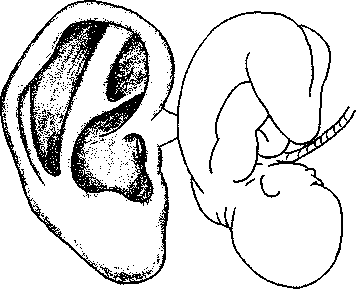
The origins of Auricular Medicine
So much of my practice revolves around the ears! You might be wondering why that is. The simple answer is that the ear contains a representative map of the entire body, including the musculoskeletal system, the organs, and the central nervous system. This map is projected onto the ear by the brain, which acts as a relay through which we recognize and experience illnesses and pain syndromes in our body. Those experiences are then projected by the brain onto the ear. By treating the ear, a signal is recognized by the brain, and sent to the part of the body in need of help. Thus, the ears give the practitioner a two-way avenue for direct communication with the brain in a way that impacts healing anywhere in the body.
Now that the fundamentals are out of the way, let’s dive deeper into how Auricular Therapy/Medicine has developed over the decades. This will be a two-part article. Here in Part 1 we will explore the origins of Auricular Medicine, and in Part 2 (July/August), we will learn about its lineage up to today.
The birth of Auricular Therapy
Auricular acupuncture began in China, but its in-depth development occurred in Europe, beginning in the 1950s. As the story goes, the French neurologist Dr. Paul Nogier noticed a scar on the ears of several of his patients. The patients reported that the scars were the result of an effective treatment for sciatica, performed by a lay practitioner of this particular treatment. Dr. Nogier was intrigued, and proceeded to do further research, ultimately discovering that the entire body is mapped on the ear in the configuration of an upside-down fetus.
In 1956, Dr. Nogier’s findings were published in an international acupuncture journal. The Chinese adopted this ground-breaking, foundational information, and built upon it using the traditional Chinese medicine system. As Nogier continued to research Auricular Therapy, he worked with Dr. Frank Bahr of Germany and Dr. Rene Bourdiol of France. Through these connections, European Auricular Therapy continued to develop in France and Germany. The French, German, and Chinese systems share a lot in common, but there are distinctive features within each system.
Nogier’s three-phase Auricular Therapy
Nogier noticed that the Chinese ear maps included different organ locations from his inverted fetus ear map. He found that the Chinese points were also effective in relieving conditions. This information fueled discovery of his three-phase system. Nogier found that the map changed depending on how chronic the condition was. Phase 1, the acute phase, was represented by the original inverted fetus map. Phase 3, the sub-acute phase, and Phase 2, the chronic/degenerated phase, each have their own distinct map. (Yes, the numbers are out of order … they are in the order that Nogier discovered and mapped each phase.) For example, if someone has chronic low back pain, but the tissues are still mostly intact, they may have active points in both Phase 1 and Phase 3.
Auricular Therapy evolves into Auricular Medicine
Vascular Autonomic Signal
In 1965, Dr. Nogier first identified the Vascular Autonomic Signal (VAS). The VAS appears as an exaggerated pulsing, most often monitored at the wrist, when the body experiences a change in stimulation—a stress response to a particular stimulus. In other words, a point that elicits a strong VAS is a point that is experiencing a lot of stress, pain, or dysfunction. By exposing the body to different tools, such as color filters, vials containing various substances, specific frequencies, flower essences, and homeopathic remedies, and monitoring changes in the VAS, the practitioner can gather information about the nature of the pathology, as well as learning which points are active and should be treated. The VAS adds complexity and nuance to both the assessment and the treatment. Use of the VAS is what elevates the practice to Auricular Medicine. If you are curious to learn more about the VAS, the 5-minute video below is very informative.
Bioenergetic field testing
The bioenergetic field that is projected beyond the ear is another assessment tool that expanded the practice of Auricular Medicine. A three-phase filter (composed of a stack of three Kodak color filters, each identifying one of Nogier’s three phases) is slowly moved laterally towards the ear until a VAS is felt. A normal bioenergetic field is 1 cm away from the ear. Anything farther out identifies dissonant or stressed energy in the field.
Bioenergetic field testing is used during the assessment to identify changes in the patient’s field as the body is exposed to different energetic challenges and information, all while monitoring the VAS. These challenges include a wide variety of things, including immune stressors (virus, bacteria, fungus, parasites), toxic stressors (chemicals, heavy metals), hormones, allergens, foods, autoantibodies, organs, anatomical structures, particular disease patterns, etc. The information gleaned from this process forms the basis of the unique protocol created for each individual.
Dr. Nogier was responsible for developing a highly robust therapeutic method that makes the most out of the microsystem that exists on our ears. The practitioners who we will discuss in Part 2 have taken Nogier’s discoveries and added many more powerful innovations for us to benefit from.
Marie's Body of Knowledge
Have you been diagnosed with tendinitis, bursitis, or another inflammatory condition? Was a cortisone shot suggested to decrease inflammation and reduce pain? Did you decide to get the cortisone shot, and lo and behold, the pain was significantly reduced or eliminated? So now what?
The fact of the matter is, the pain is improved but the problem is not resolved. Generally, poor mechanics, overuse, or muscle weakness has led to the inflammation and pain. The cortisone injection has reduced the pain but the underlying cause continues to persist.
Once the cortisone injection has reduced pain and improved function, that is the time to seek the help of a physical therapist. A PT will perform a thorough evaluation and identify joint dysfunction, muscle weakness, and faulty mechanics that led to the problem. Without manual therapy and the help of an individually designed exercise program, the pain and inflammation will most likely return within a few weeks to months, because the underlying cause hasn’t been resolved.
A physical therapist can perform hands-on therapy techniques to decrease muscle tension and improve joint mechanics. When mechanics improve, then exercises to strengthen weak muscles can begin to improve overall long-term function. In general, it takes 6-8 weeks of diligently performing exercises to restore strength and mechanics.
After a cortisone injection, give yourself the best chance for long-term pain relief. Seek out a physical therapist to help you back on the road to recovery.
Electro-acupuncture medicine
I’ve used electric stimulation in my practice to some degree for many years. Applying an electrical current helps strengthen muscles, block pain signals, and improve blood circulation. In late summer 2023, I took my first training with Dr. Jeremy Steiner of the Electro-Acupuncture Institute and followed up with additional training. Dr. Steiner's approach is different and far more comprehensive than other electric stimulation techniques I've used, and thus is called electro-acupuncture medicine.
I’ve used electric stimulation in my practice to some degree for many years. Applying an electrical current helps strengthen muscles, block pain signals, and improve blood circulation. In late summer 2023, I took my first training with Dr. Jeremy Steiner of the Electro-Acupuncture Institute and followed up with additional training. Dr. Steiner's approach is different and far more comprehensive than other electric stimulation techniques I've used, and thus is called electro-acupuncture medicine. I've incorporated it more and more in the clinic and have observed that outcomes are significantly improved.
Why add electricity to an acupuncture treatment
Electro-acupuncture works by adding energy to specific acupuncture channels to improve energy flow throughout the body. Adding electricity to an acupuncture treatment will enhance or add to the treatment effects. Electro-acupuncture can:
Stimulate more efficient production of new cells
Offer pain relief and calm inflammation
Remove toxins from the body
Increase blood flow
Reduce stress hormones
Improve immune function
Our cells are damaged by injuries, toxins, infections, and more. The body needs to create new cells to repair the damage. Voltage is the driving force behind cellular function and is regulated by various factors, including thyroid hormone, dental infections, and exercise. Chronic disease is often associated with low body voltage—meaning, the body can’t keep up with cellular renewal. The body is designed to function at -25 mV, and requires -50 mV to generate new cells. Since our body is in a constant state of cellular renewal, higher voltage is the key to maintaining and improving health.
The devices
In the past, I used run-of-the-mill electric stimulation devices, which are high amperage (volume of electricity) and low voltage (electrical potential). These worked well to either relax a muscle that was too tight, or stimulate a muscle that was too weak. Unfortunately, the treatment with these devices can be uncomfortable. To be effective, it is typical to use strong stimulation, causing the muscles to spasm.
The new devices that I use are high voltage and low amperage; in other words, the opposite. This decreases discomfort because only mild stimulation is necessary. The electricity produced is also more congruent with the body’s electricity, improving the healing outcomes. These devices also have particular frequencies programmed in them that can be selected to match the condition and treatment. The protocol uses two devices simultaneously, each programmed with a different frequency. This creates a blanketing effect of frequencies, allowing the body to choose the frequency it needs to enhance the healing process and discard those it doesn't need.
The bottom line is that the proper voltage, amperage, and frequencies are required so that the electricity can reach the energy-deficient and damaged tissue and support cellular regeneration and repair.
The outcomes
I have seen many positive responses to electro-acupuncture treatments. In some cases, I simply added electricity to my usual treatments, and in others, I chose to follow a four-point protocol with electricity. Both have been very effective. I have seen improved relief of pain, increased energy and well-being, decreased anxiety, improved sleep, and in cases of diabetic neuropathy, I’m beginning to see increased sensation. As I continue to implement these treatments, I hope to see even more improvements, especially in chronic, hard-to-treat conditions.
In search of health
As this year comes to a close, I am filled with excitement and gratitude as I think of all the wonderful people who have walked through the doors at Red Clover Clinic. I have witnessed some profound shifts towards health during the past year…pain has decreased, anxiety has become manageable, depression has lifted, digestion has improved, and other complaints have faded away. The shift that has impressed me the most, and seems to be a common thread in all of my clients, is a new respect and understanding of how to nurture one’s body and one’s health.
As this year comes to a close, I am filled with excitement and gratitude as I think of all the wonderful people who have walked through the doors at Red Clover Clinic. I have witnessed some profound shifts towards health during the past year…pain has decreased, anxiety has become manageable, depression has lifted, digestion has improved, and other complaints have faded away. The shift that has impressed me the most, and seems to be a common thread in all of my clients, is a new respect and understanding of how to nurture one’s body and one’s health.
In a world where searching for the cure seems to be the focus, holistic medicine teaches us that health is rarely about simply curing a particular ailment, but more about learning how to work with our bodies within the context of our lives and the world in which we live. How do we nourish ourselves? How do we manage our stress? How do we use our bodies correctly to avoid pain? How do we best support our immune system? Certainly, there are treatments to take away pain and to help us recover from disease, however, if we haven’t learned how to respect and nurture our health through the recovery process, we will only stumble into sickness and discomfort again, and again.
Nurturing health and wellness is a life-long pursuit and learning process, and it requires patience, persistence and awareness. It requires us to make healthy choices, and to find help and support when we need it. I am grateful to all of you who have allowed me to be a part of your journey to discovering and maintaining your health. Thank you.